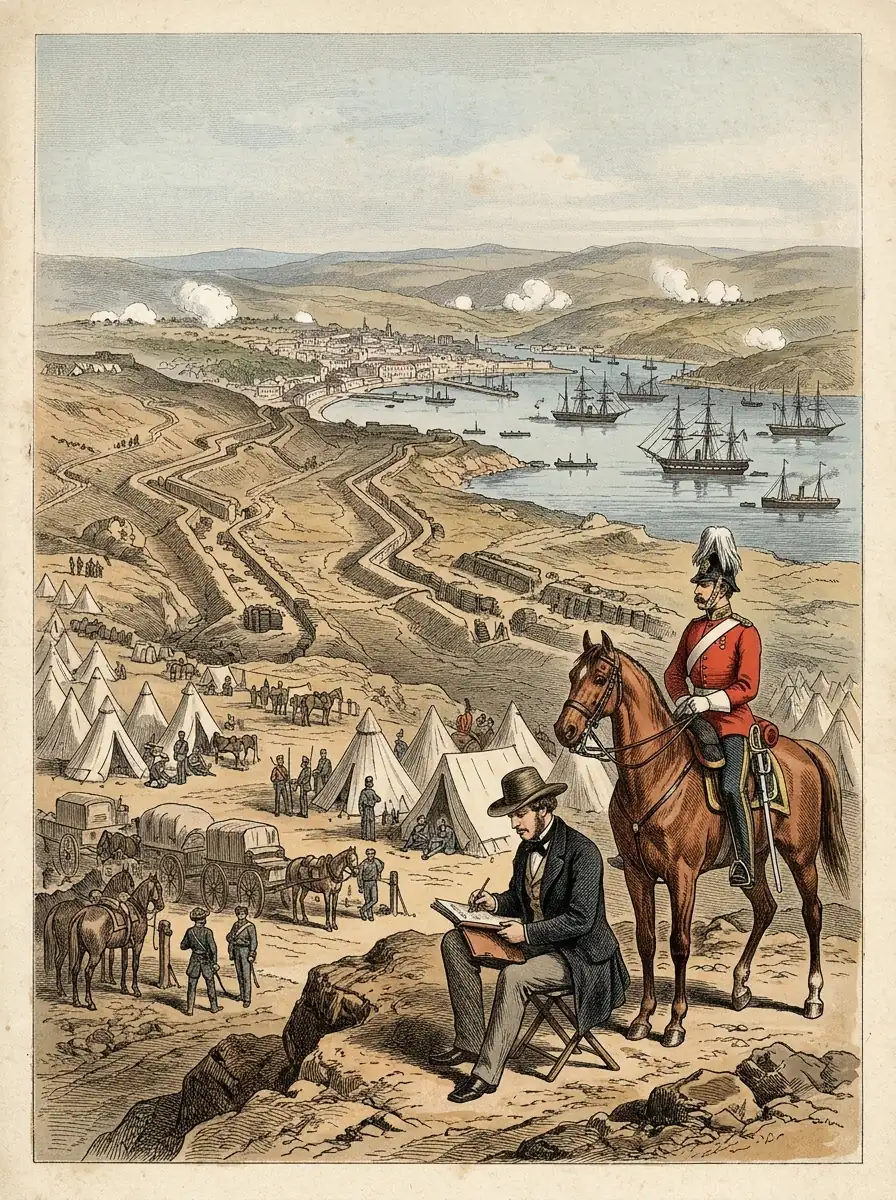
The Crimean War of 1853–1856 was the first major European conflict covered by professional war correspondents, military surgeons and travelling artists — and it remains one of the best documented campaigns of the nineteenth century. This library brings together the original eyewitness volumes that shaped how the world understood the war. Here is where to start and how the books fit together.
Why read the eyewitnesses
Later histories of the war all descend from a small shelf of books written while the campaign was still unfolding. The British Expedition to the Crimea reconstructs events from official dispatches and private letters, from the allied landing at Kalamita Bay to the fall of Sebastopol. Because these authors were participants and observers rather than later interpreters, their pages preserve the prices, rumours, mud and fear that summary histories leave out.
The great set pieces: Alma, Balaklava, Inkermann
The clearest illustrated narrative is The Campaign in the Crimea: An Historical Sketch, published with William Simpson's lithographs drawn on the spot. Follow the allied army through the Battle of the Alma and the flank march on Sebastopol, then into the first bombardment and the Battle of Balaklava — including the famous cavalry charge — and the fog-bound struggle the soldiers simply called the Battle of Inkermann. The closing chapters carry the story through the expedition to Kertch and the final assaults of June 1855.
For the correspondent's-eye view, W. H. Russell's letters to The Times pick up the story at Lord Raglan's death and follow the siege to the Russian evacuation — the same reporting that famously exposed the winter sufferings of the allied armies.
The war behind the lines
Two remarkable eyewitness books show what the camera could not. Notes on the Surgery of the War in the Crimea records gunshot wounds, chloroform anaesthesia, hospital hygiene and amputations from inside the military hospitals. And from inside the besieged city itself, Sevastopol — Tolstoy's three sketches published while the siege still raged — carries the reader from the dressing station to the bastions in the prose that made his name.
The country the war was fought over
The peninsula did not appear on Western maps out of nowhere; a generation of travellers had already described it. Xavier Hommaire de Hell's arrival in Odessa opens his journey through the steppes of the Caspian, the Crimea and the Caucasus. New Russia portrays the colonists, towns and Crim Tatar neighbours between Riga, Kiev and the Crimea in the 1820s, while The Cossacks of the Ukraine profiles the frontier cavalry society that had guarded these lands for two centuries.
Read them together and the siege stops being a date in a textbook: it becomes the voices of the people who were there. Browse the full collection in the library catalogue.